Shared trip
Boat trip
Güigüí beach boat trip, Gran Canaria
About 4 hours Up to 18 guests
from€125/ person
No road, no bar, no sunbeds — just dark sand, towering cliffs and the Atlantic. Here is how to reach it.
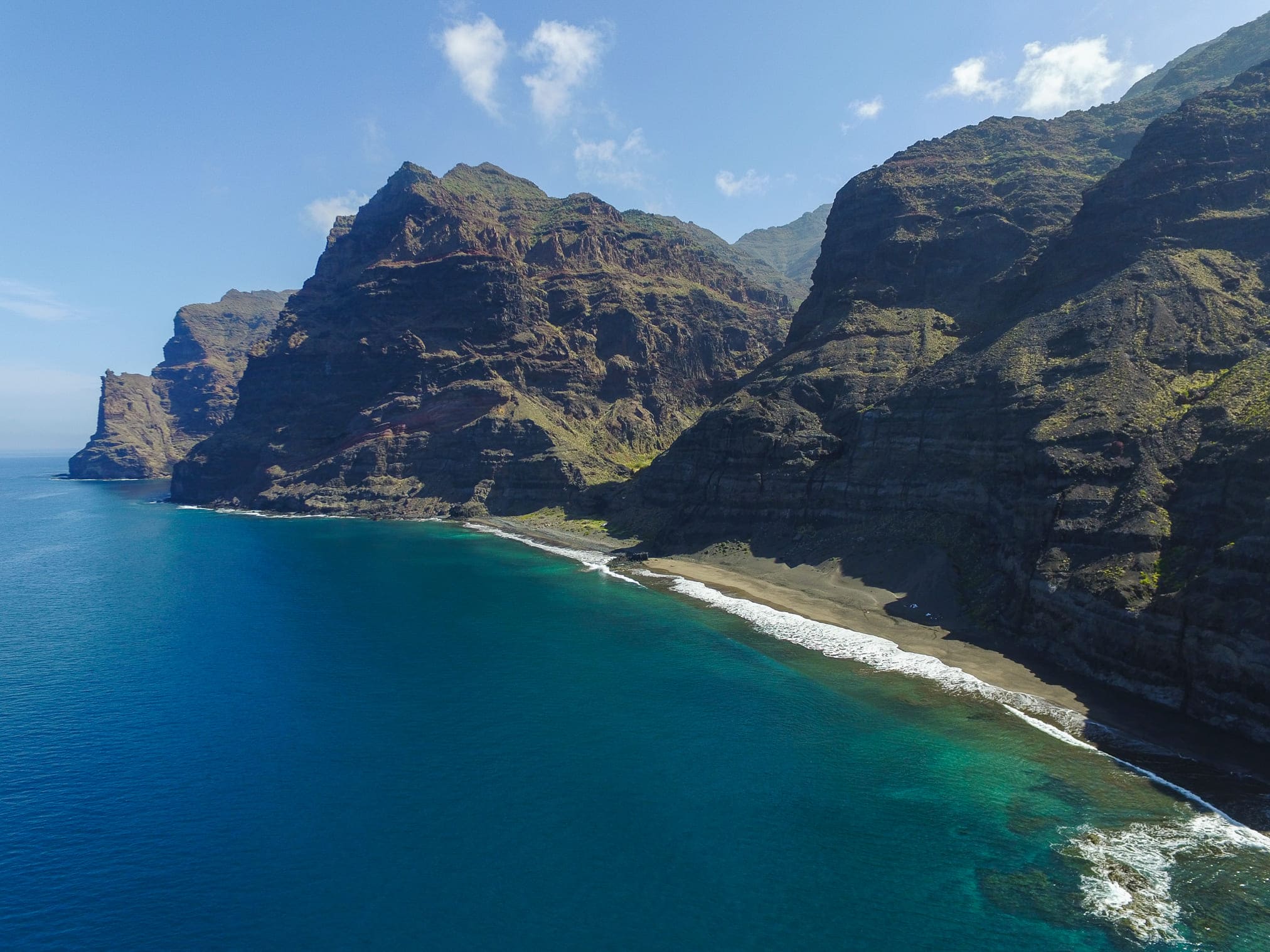
Güigüí is often described as the most remote beach on Gran Canaria, and for once the description is fair. It sits on the far west of the island, at the mouth of a deep ravine, beneath some of the tallest cliffs on the coast. There is no road to it. The coastal highway in this corner of the island turns inland long before, and beyond the point where the road gives up, beaches such as Veneguera, El Perchel and Güigüí are left to those willing to walk or sail.
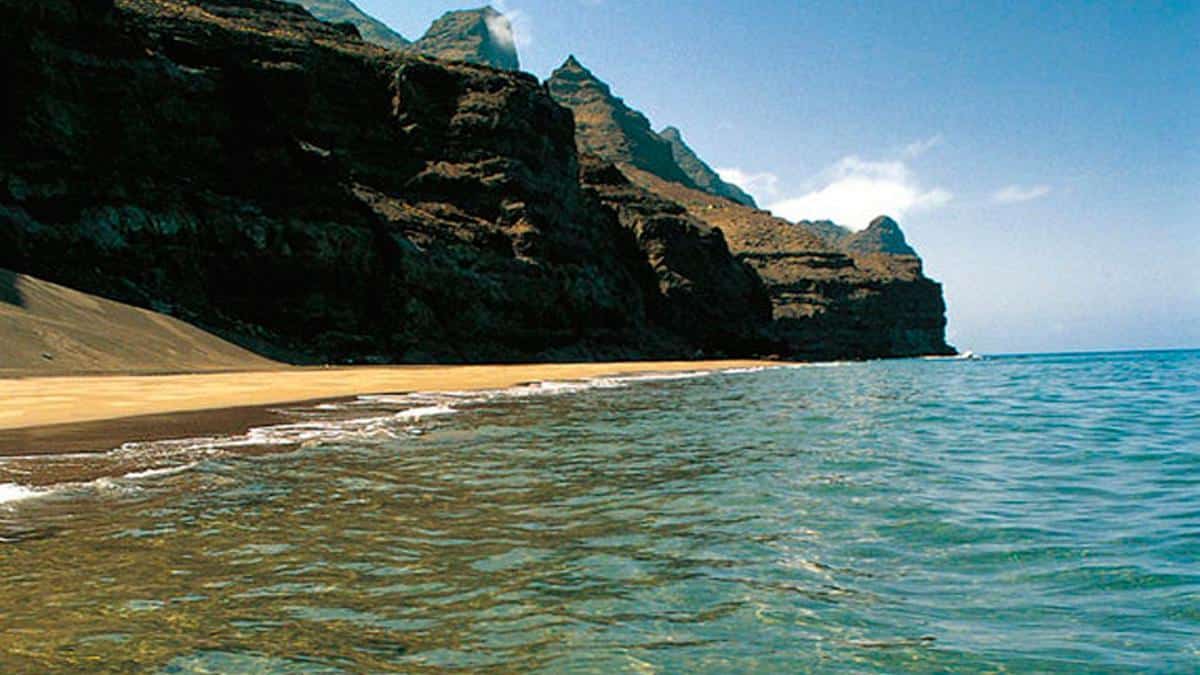
That isolation is exactly the appeal. On a busy island with packed resort beaches, Güigüí feels like a different place: a long stretch of dark volcanic sand, the ravine opening behind it, and nothing built at all. On a clear day, the outline of Teide on Tenerife can appear across the water.
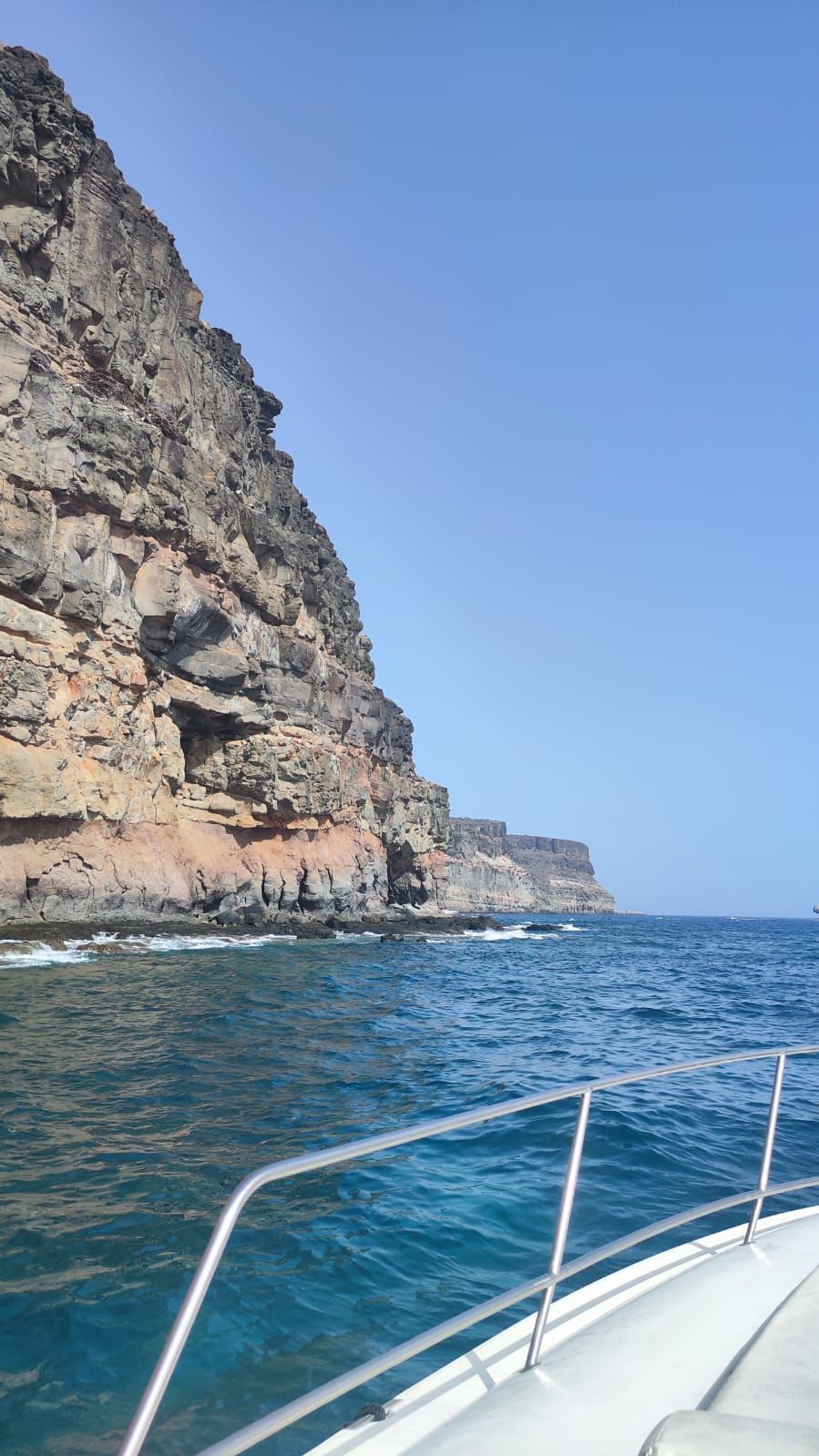
The simplest way to reach Güigüí is by boat. From the marinas of the south-west, boats follow the coastline west, past volcanic cliffs, caves and rock formations that you can only really appreciate from the water. The journey is part of the day rather than a chore to get through, and you arrive rested and ready for a swim.
Our shared Güigüí beach trip does exactly this, with stops along the way to swim and snorkel, and snorkel gear on board. If you prefer to have the boat to yourselves, a private charter of sufficient length can head the same way; ask when you book whether the time you have chosen allows it.
Whether a boat can approach the beach, and for how long, depends on the sea on the day. Güigüí faces the open Atlantic, and when there is swell the skipper may keep the boat at anchor further out or choose a more sheltered stop instead.
The other way in is on foot, down through the ravine from the nearest road-end. It is a proper hike over rough, steep terrain, not a stroll, and it involves climbing back out again at the end of the day when you are tired and the sun is high. We are not going to give you a distance or a walking time, because conditions, route choice and fitness vary too much; check an up-to-date hiking source and the local authorities before you set off.
If you do walk, treat it as a mountain outing. Start early, tell someone where you are going, and do not rely on phone signal.
Güigüí has no facilities of any kind — no shop, no bar, no toilets, no lifeguard, no shade except what the cliffs throw at certain times of day. Whatever you need, you have to bring, and whatever you bring, you have to take away again.
If you go by boat, some of this is taken care of — check the tour page for what is included on board — but the beach itself offers nothing, so bring what you want to have with you on the sand.
Walking to Güigüí is a genuine achievement and a wonderful day for experienced hikers. For most holidaymakers, though, the boat makes more sense. You avoid the climb in the heat, you see the coastline from its best angle, and you can bring children or relatives who would never manage the ravine.
Whichever way you choose, be careful in the water. The beach is exposed to the open ocean, there is no lifeguard, and swell can make the shoreline dangerous. If the sea looks rough, admire it from the sand.
And please leave it as you found it. Güigüí is special precisely because nobody has built anything there, and it stays that way only if every visitor takes their rubbish home.
No. There is no road to the beach. You can only reach it by sea or on foot through the ravine.
None at all: no bar, shop, toilets or lifeguard. Bring everything you need, including plenty of water.
It depends on the route, your fitness and the conditions, so we do not give a figure. Check an up-to-date hiking source before setting off.
It depends on the sea on the day. With swell, the skipper may anchor further out or choose a more sheltered stop.
It faces the open Atlantic and has no lifeguard. On calm days it is lovely; when there is swell, stay out of the water.