Private
Private charter
Private boat charter in Gran Canaria on the Malu V
Skipper included No licence needed
from€150/ boat
Most people are fine, and those who are not can do a lot to help themselves. Here is the common-sense version.
Seasickness is a form of motion sickness. Your inner ear senses the boat moving while your eyes, fixed on something inside the boat, tell your brain that you are standing still. The brain does not like the mismatch, and the result can range from a slight queasiness to feeling genuinely unwell. It is extremely common, it has nothing to do with being weak or unfit, and people who get it on one trip are often perfectly fine on the next.
The good news for a trip in Gran Canaria is that the south-west coast sits on the lee side of the island, sheltered from the north-east trade winds, so the sea is often calmer here than elsewhere around the island. That does not rule out a bit of motion, but it does help. Before the trip, it is worth talking to a pharmacist if you know you are prone to it.
Most of what helps happens before you step aboard. Sleep well the night before and go easy on the alcohol — a hangover and a boat are a miserable combination. Eat a light, plain breakfast rather than skipping food entirely or having a large greasy one. And drink water.
If you want to use a travel sickness remedy, ask a pharmacist for advice before the trip. They can recommend something suitable for you and tell you when to take it, which often needs to be some time before departure rather than once you already feel unwell. Mention any other medication you take, and ask about options for children if they are travelling with you.
Once you are on the water, the single most useful thing you can do is look at the horizon. It gives your eyes a stable reference that matches what your inner ear feels. Stay out on deck in the fresh air, towards the middle and the back of the boat where the motion is usually gentler, and avoid going below deck or reading your phone for long periods.
Keep sipping water, nibble something plain if you feel like it, and keep your mind busy — chatting, watching the coast or looking out for seabirds all help. If you start to feel queasy, tell the crew early. They have seen it many times, and they can suggest a better spot or, on a private charter, adjust the route towards calmer water.
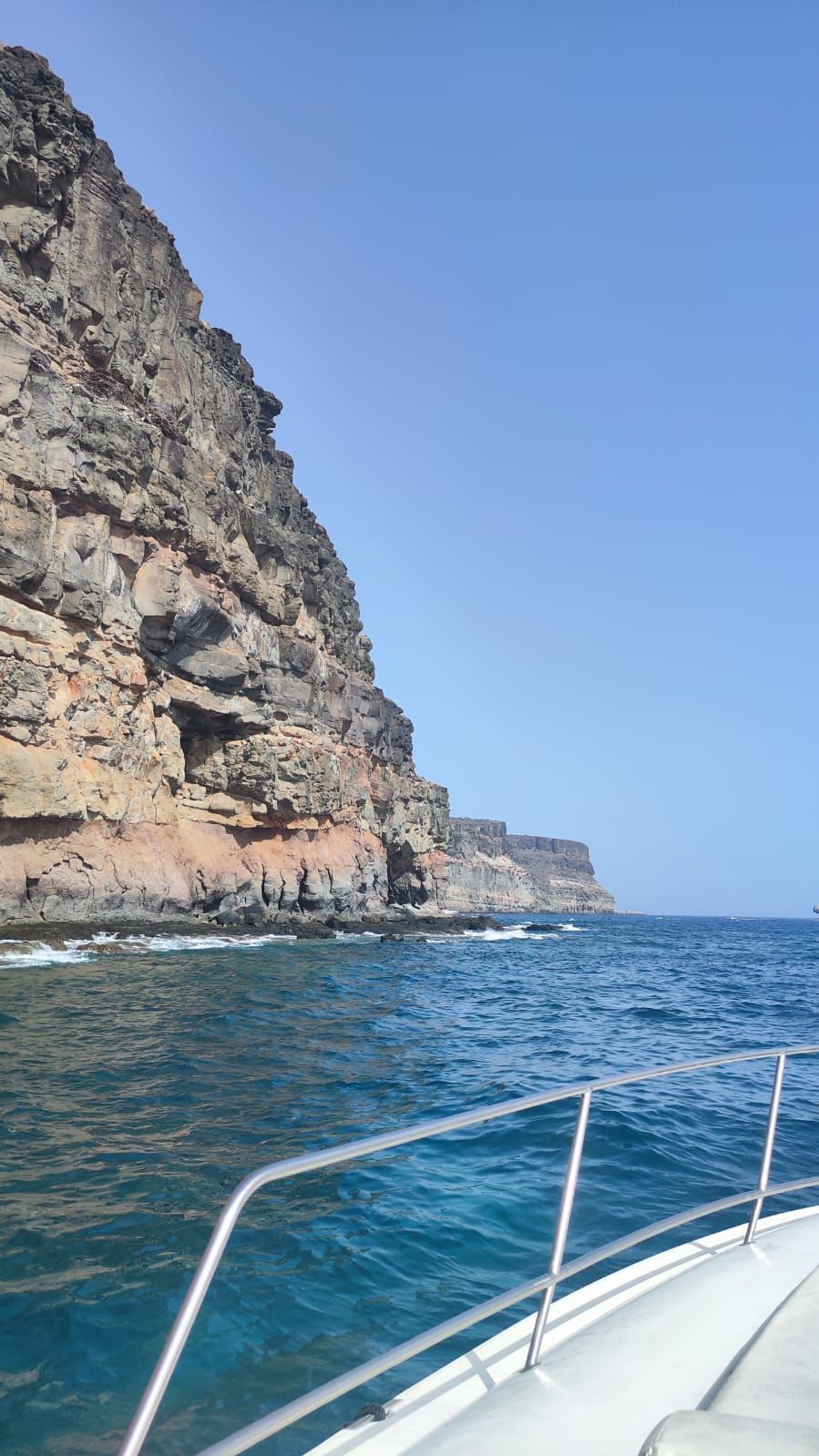
Many of our trips include swimming stops, and a lot of people find that getting into the sea makes them feel better almost immediately. Floating in the water, your body stops fighting the motion of the boat. If you feel unsteady, there is no pressure to swim, but do not rule it out: a few minutes in the water and some fresh air often reset things.
Snorkelling is best avoided if you feel very unwell, because looking down through a mask can make things worse. Swim, float and look at the cliffs instead.
If you are particularly worried, choose your trip with care. A shorter outing is a gentler introduction than a full day. A private charter gives you control over the route and the pace, and your skipper can keep to more sheltered water. And whatever you book, keep an eye on the forecast: our guide to the best time for a boat trip explains how wind, swell and time of day affect the sea.
Remember that we will not take you out if the sea is unsafe. If swell, wind or calima make conditions bad, we offer another date or cancel. For everything medical beyond these common-sense tips, speak to a pharmacist or your doctor.
Out on deck in the fresh air, towards the middle and back of the boat, with your eyes on the horizon.
Ask a pharmacist before your trip. They can recommend something suitable and tell you when to take it.
The south-west coast is sheltered from the trade winds and is often calmer than the north, but conditions vary from day to day.
Yes, something light and plain. An empty stomach or a heavy, greasy meal can both make things worse.
Tell the crew early, look at the horizon, get some fresh air and sip water. A swim at the next stop often helps too.